Bedding · Textile construction
Silk or Cotton Shell? Understanding Gingerlily Comforter Construction
A comforter’s filling may get the attention, but the fabric around it matters too. In silk-filled bedding, the shell shapes the surface, influences how the comforter is handled, and helps determine what care it needs.
Published November 24, 2026
A comforter has two textile stories. One is inside: the fibers that trap warmth and give the bedding its loft. The other is outside: the shell that contains the filling, meets the duvet cover or the sleeper, and gives the finished piece much of its character. With silk-filled comforters, the contrast between these layers becomes especially interesting when the shell is also silk—or, alternatively, cotton.
Gingerlily’s silk-filled comforters illustrate how one natural filling can be enclosed in different fabrics. A silk-shell design pairs long-strand mulberry silk filling with a charmeuse silk exterior. A cotton-shell version puts silk fibers inside a cotton cover. Both constructions center on silk insulation, but they are not identical in hand, finish, or maintenance.
That distinction is worth understanding before choosing bedding. “Silk comforter” can describe the filling, the shell, or both. Reading the construction details clarifies what those words mean—and why shell fabric is more than a decorative decision.
The shell’s quiet job
The shell is the fabric enclosure around the filling. It holds the layers together, helps keep fibers contained, and influences how a comforter feels when handled or used without a separate cover. Its weave and fiber also affect the way it drapes, the character of its surface, and the care that is practical for the finished bedding.
In a silk-filled comforter, the shell does not replace the insulating role of the filling. Instead, the two components work together. The filling supplies the central layer of warmth; the shell contains and protects that layer. A silk shell makes both the interior and exterior silk-based. A cotton shell creates a mixed-fiber construction: silk inside, cotton outside.
That difference can be easy to overlook when product descriptions emphasize “silk-filled” or “all-season.” Yet it is central to understanding the object. Two comforters can share a silk filling and still have different surfaces and care requirements because their shells are made from different fibers.
Silk around silk: a continuous material story
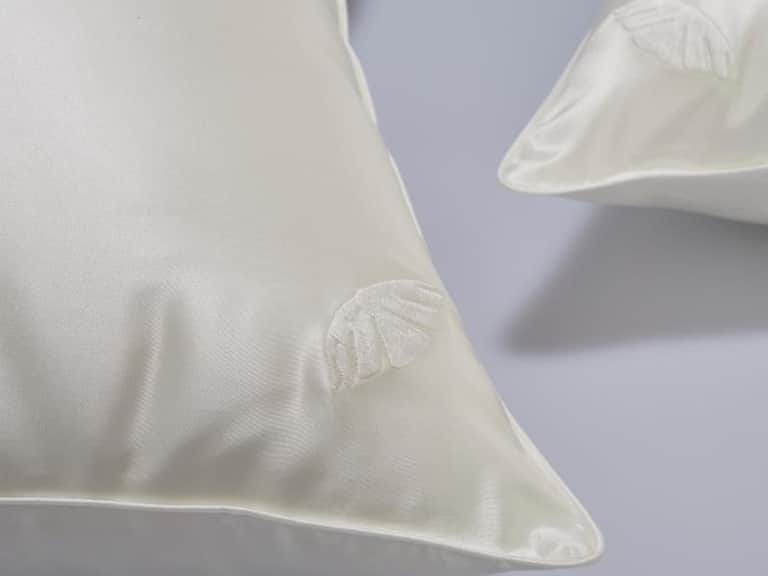
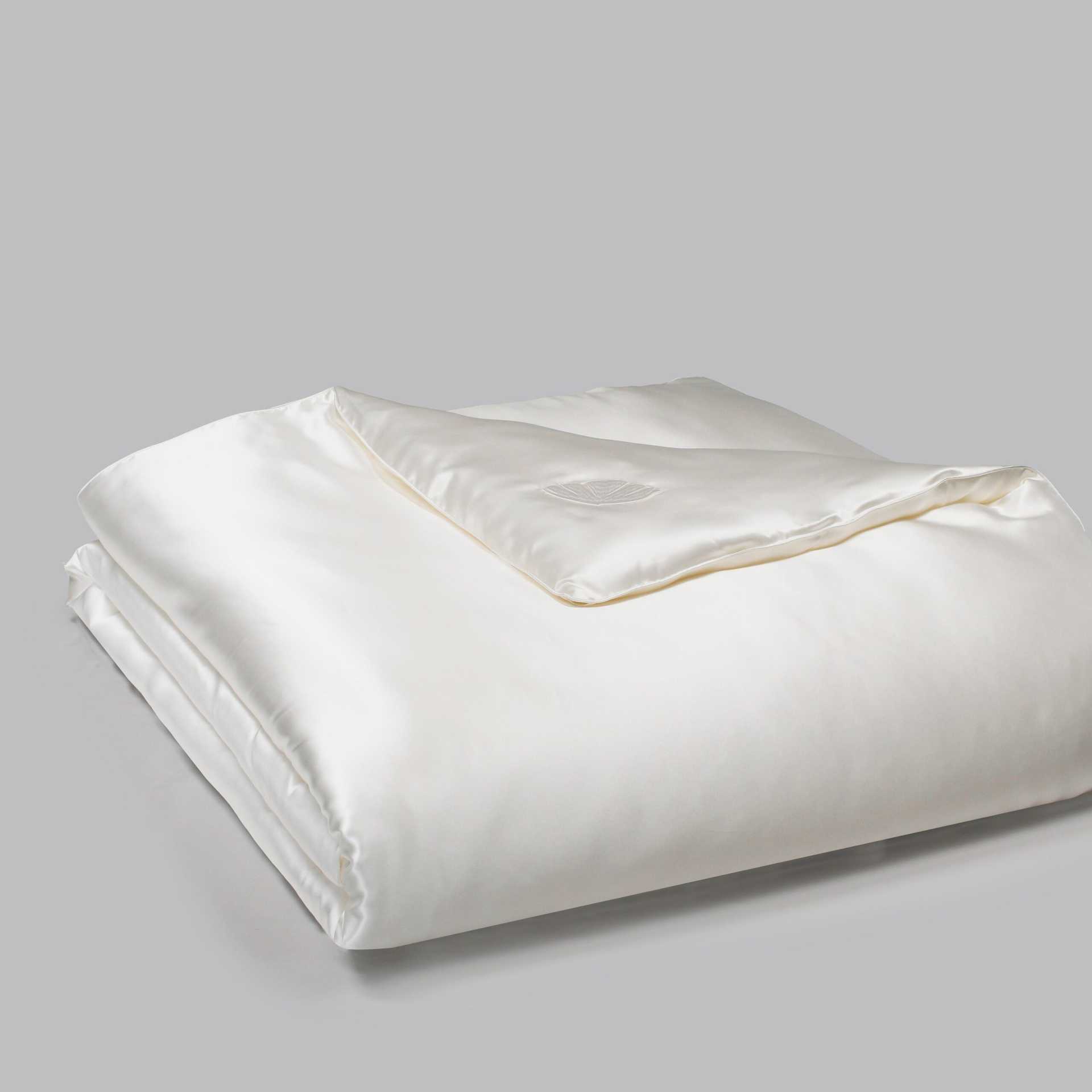
The Gingerlily All Season Silk Filled Comforter with Silk Shell is described as having Grade 6A long-strand mulberry silk filling and a 16 momme charmeuse silk shell. The construction brings silk into both the insulating layer and the outer enclosure. Classic piping edging gives the perimeter a tailored finish, while corner loops are designed to help secure the comforter inside a duvet cover.
Charmeuse refers to a satin-weave fabric commonly associated with a smooth face and a lustrous appearance. The weave affects the surface; it does not mean the shell is a different fiber from silk. In this case, the stated shell material is charmeuse silk. Momme is a unit used to describe silk fabric weight. A 16 momme figure gives a more useful specification than a general description such as “light” or “luxurious,” though it does not by itself tell a reader everything about durability or feel. Weave, finishing, construction, and use all matter too.
A silk shell may appeal to someone who values a silk surface as part of the bedding’s overall material character. It also creates continuity: the fill is silk, and so is the shell. That does not mean the comforter must be used without a duvet cover. The loops indicate a practical role for a cover, which can help protect the comforter and make routine bedding changes more straightforward.
The stated care guidance for this design is notably specific: air it out once or twice a year or refresh it in a dryer; do not wash or dry clean; spot clean only as needed. Those instructions should take precedence over assumptions based on another silk item. A silk pillowcase and a silk-filled comforter are different constructions, and their care needs cannot safely be inferred from one another.
Cotton around silk: a different outer layer
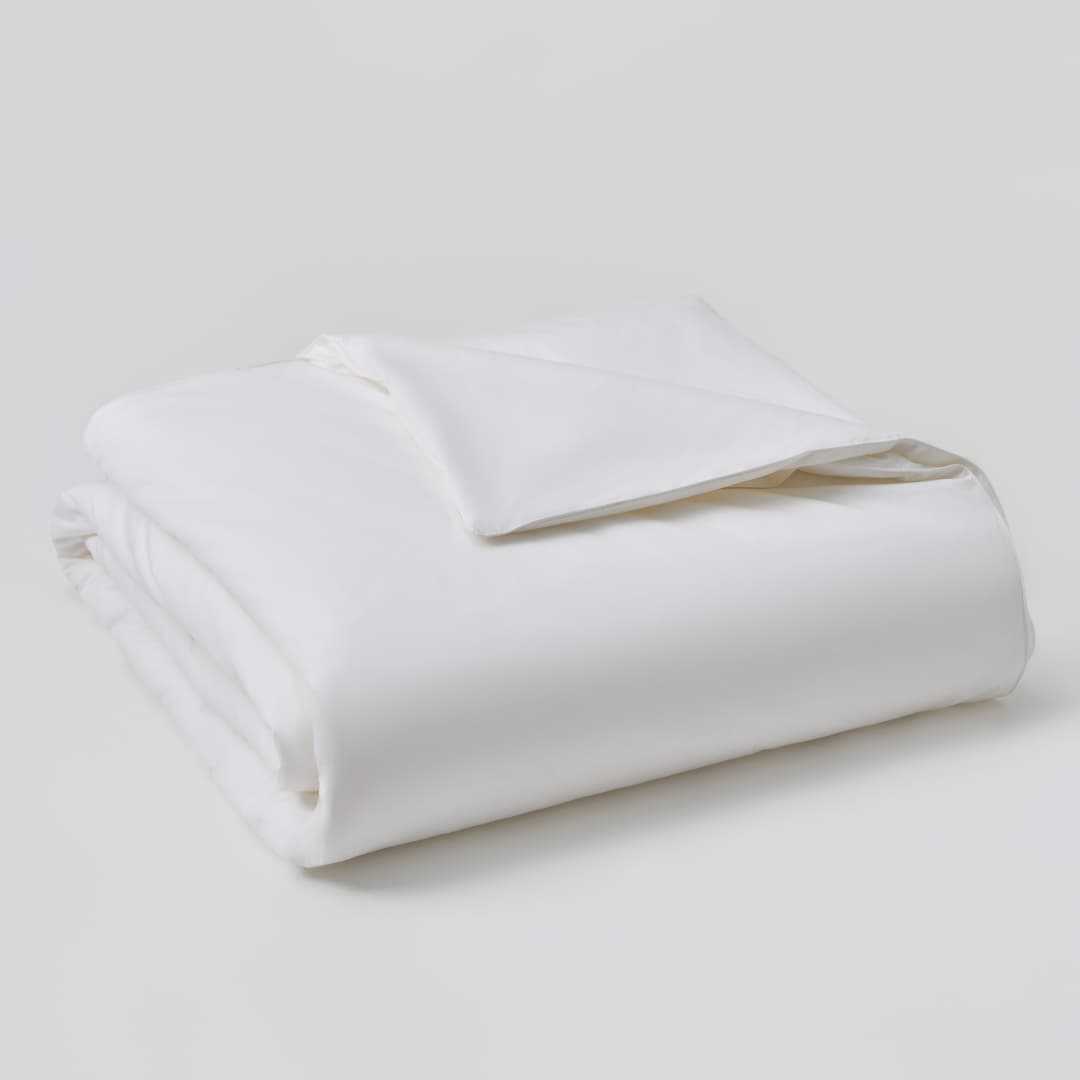
The Gingerlily All Season Silk Filled Comforter with Cotton Shell takes another route. Its description identifies double long-strand mulberry silk fibers as filling and a cotton shell woven to 600 thread count. The silk layers are hand-stretched to create an even distribution of loft. In this construction, the filling remains silk, but the fabric surrounding it is cotton.
Thread count refers to the number of threads in a defined area of woven fabric, generally described per square inch. It is a specification about the cotton shell’s construction, not a measure of the silk filling or a direct measure of comfort. It should be read alongside the stated fiber, weave, finishing, and the maker’s description of the finished item.
Choosing cotton as the shell changes the material combination without changing the fact that silk is the filling. That distinction is useful for readers comparing bedding by fiber: the shell is the part that forms the comforter’s enclosure, while the fill is the insulating material inside. A cotton shell may be a familiar textile surface for people accustomed to cotton bedding. Whether it is the preferred option depends on personal priorities, the intended use, and the complete care instructions.
The description emphasizes hand-stretched silk layers and even loft. That points to an important construction question: how the filling is arranged and held in place. A comforter needs an enclosure that manages its inner layers through ordinary handling and use. Shell fabric and internal construction are related parts of the finished object, but they are separate details. A high thread count does not, by itself, explain how the silk is layered; nor does a silk shell automatically describe the fill’s arrangement.
What “all-season” can—and cannot—tell you
Both styles are presented as all-season comforters. The phrase signals an intention to provide adaptable warmth, but it is not a promise that every sleeper will feel the same way in every room. Sleep temperature depends on many variables: the bedroom climate, the sleeper’s preferences, other bedding layers, and how much warmth an individual finds comfortable.
Silk fibers are often valued in bedding for their lightness and ability to help moderate warmth and moisture. These general material qualities help explain why silk is used as an insulating fill. They should not be mistaken for a guarantee of a particular sleep outcome. A comforter’s performance depends on its full construction and on the conditions in which it is used.
It also helps to distinguish an all-season comforter from a summer-weight design. Gingerlily’s separate summer-weight silk-filled comforter is described as being intended for lighter warmth on warmer nights. That makes the broader point: the word “silk” alone does not define the warmth level. Fill quantity, fiber arrangement, shell, and intended weight all contribute to how a comforter is designed to feel.
Comparing the two constructions
The simplest comparison is not “silk versus cotton” in the abstract. Both comforters contain silk filling. The question is which shell material surrounds that filling and how the complete construction fits the way the bedding will be used.
- Silk-filled, silk-shell construction: Grade 6A long-strand mulberry silk filling, a 16 momme charmeuse silk shell, piping, and corner loops. The stated care is to air out or refresh as directed, avoid washing and dry cleaning, and spot clean only as needed.
- Silk-filled, cotton-shell construction: Double long-strand mulberry silk filling within a 600-thread-count cotton shell, with the silk layers hand-stretched to support even loft. The supplied description highlights these material and construction details; consult the item’s own label or instructions for its complete maintenance guidance.
The first makes silk the material of both the fill and shell. The second combines silk insulation with a cotton enclosure. Neither description alone establishes that one is universally superior. A considered choice begins with the details that matter most to the person using it: surface preference, construction, expected layering, and care requirements.
Care is part of construction
Comforter care is not a footnote. It is part of understanding what the object is made to do. A shell protects the filling, but cleaning methods can affect the shell, the internal layers, or both. The fact that silk can appear in washable pillowcases does not mean a silk-filled comforter can be washed in the same way. Nor should the presence of cotton be treated as permission to machine-wash the complete item.
For the silk-shell Gingerlily design, the supplied instructions say not to wash or dry clean. They recommend airing it out once or twice a year or using a dryer to refresh it, with spot cleaning only when needed. Follow the product’s own label for any dryer settings or additional precautions. If the label is missing or unclear, seek guidance from the manufacturer or a qualified textile-care professional before proceeding.
For the cotton-shell version, the available description explains its shell and filling but does not provide a full care routine. That is a reason to check the specific care label rather than assume a familiar cotton shell makes the entire comforter suitable for ordinary home laundering. The silk fill remains part of the construction and may impose different limits from those of a cotton sheet or cover.
In everyday use, a duvet cover can provide a removable outer layer between the comforter and regular contact. Corner loops can help connect a comforter to a compatible cover, reducing the chance of the layers shifting independently. Follow the cover and comforter instructions when arranging them, and avoid tugging at seams or loops unnecessarily.
A practical way to choose
Start with the specification, not the shorthand. Look for separate descriptions of the shell and filling. If a listing says “silk-filled,” ask what the shell is made from. If it says “silk shell,” confirm whether silk is also the fill. Then note the weight or weave information provided, the construction details, and the care instructions.
Next, consider how the comforter will be used. Will it sit inside a duvet cover? Is a silk exterior itself an important part of the appeal, or is a cotton shell a more familiar choice? How much warmth is comfortable in the room? Does the owner have the time and resources to follow the care routine specified for the item? These practical questions often offer more guidance than a general promise of luxury.
Certification can be another useful detail, but it should be interpreted precisely. The silk-shell comforter is listed as certified to OEKO-TEX Standard 100. This is a textile-safety certification; it does not, by itself, describe the comforter’s warmth, its durability, or its environmental footprint. Certifications are most useful when readers understand what they cover and do not treat them as substitutes for construction details.
For readers comparing silk-shell and cotton-shell bedding more broadly, another silk-filled cotton-shell construction is described in the All Season Silk Filled Comforter with Cotton Shell. A silk-shell example is the All Season Silk Filled Comforter with Silk Shell. These are Perle Silk products, not Gingerlily products; their descriptions provide examples of the same broad construction distinction, not a basis for treating the brands or specifications as interchangeable.
The detail that changes the whole reading
“Silk comforter” sounds like a single, simple category. In practice, it can describe a layered textile with several decisions built into it: what the fill is, what the shell is, how the filling is arranged, how the edges are finished, and how the finished piece should be cared for. The shell is one part of that system, but it is the part that makes the contrast between silk and cotton immediately legible.
In Gingerlily’s silk-filled designs, a silk shell creates a silk-on-silk construction, while a cotton shell places cotton around silk insulation. The material choice changes the outer fabric and the way the comforter should be understood; it does not erase the shared role of silk filling. Reading the details in that order—fill, shell, construction, care—turns a marketing phrase into useful information.
The result is a more thoughtful way to choose bedding. Not simply by the prestige of a fiber, or by the number attached to a fabric, but by the relationship between layers and the habits required to look after them. In a comforter, as in many textiles, what surrounds the material is part of the material story.
At a glance
- A comforter’s shell encloses the filling and contributes to its surface, finish, and care needs.
- A silk-shell comforter pairs silk filling with a silk exterior; a cotton-shell comforter pairs silk filling with a cotton exterior.
- Momme describes silk fabric weight, while thread count describes a cotton fabric’s thread density; neither number explains the whole construction.
- “All-season” describes an intended use, not a guarantee of identical warmth or comfort for every sleeper.
- Follow the care instructions for the complete comforter. Do not assume a shell’s fiber alone determines whether the filled item can be washed.